


Two of the last known original witnesses of the 1959 Father Gill Sightings in Papua New Guinea, have sadly passed away. Dulcie Freda Guyerobo and Jane Rarata passed away earlier this year.
I came across this information while researching for the following video I made regarding the sighting.
Unfortunately I have been unable to confirm the exact dates, however I have reached out to Guyerobo’s daughter, Olga, and Rarata’s son Eric, for confirmation.
This sad news led me to think about the other Father Gill sighting witnesses, and whether or not any of them might still be alive today. Some will have undoubtedly left us, being now 66 years to the day since the date of the incident. However, some were children at the time which would place them in their 70s or 80s today.
Father Gill stated that only the majority of witnesses signed his statement that documented the sighting, therefore it’s safe to say there may well be further witnesses separate to Gill’s statement, alive and well today. The sheer size of the Papua New Guinea UFO wave of 1958-1959 (of which the Father Gill sighting belongs) surely suggests that other potential witnesses may still be waiting to tell their story.
If indeed human, might any of the four crew members on-board the object witnessed on the 26th-27th June of 1959 over Boianai also be alive today? The average age of a U.S. Airman in 1959 was 26, placing them today at 92 years old. Even though the life expectancy for a male born in 1933 was 61 years old, I think it’s possible for someone born then to live to 92 and beyond.
Who might the 4-man crew have been? Surely at least one was a pilot. Father Gill suggested that two of the figures in the centre of the deck were possibly adjusting some piece of equipment. Could they have been engineers or technicians on-board to operate a Laser Directed Energy Weapon (LDEW)?
Gill also stated that he and other witnesses noticed another UFO higher in altitude than the one closest to him, which appeared exactly the same. Did this other UFO also have a similar 4-man crew on-board? Were the other two UFOs, even higher up still, also of the same aircraft design?
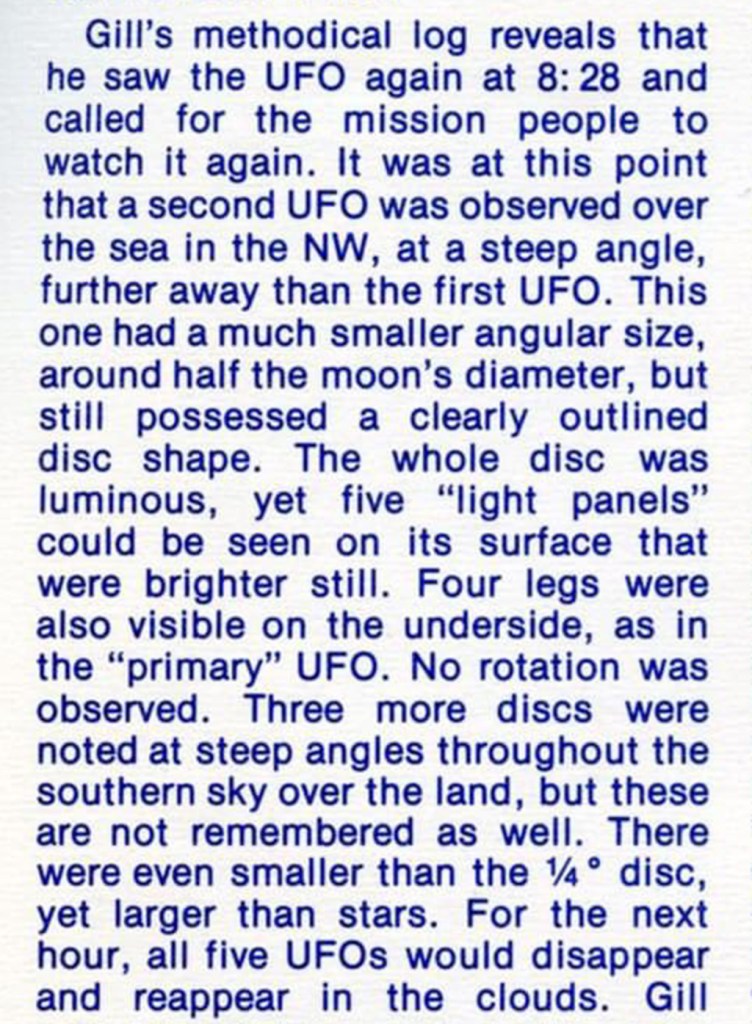
Had any of the crew members signed the U.S. Secrecy Act? If so, I wonder if any had felt relaxed about their oath as the years passed by. Might it be possible they confided in a son, a daughter or close friend, and divulged information of their involvement in a secret U.S. LDEW program and their classified aircraft?
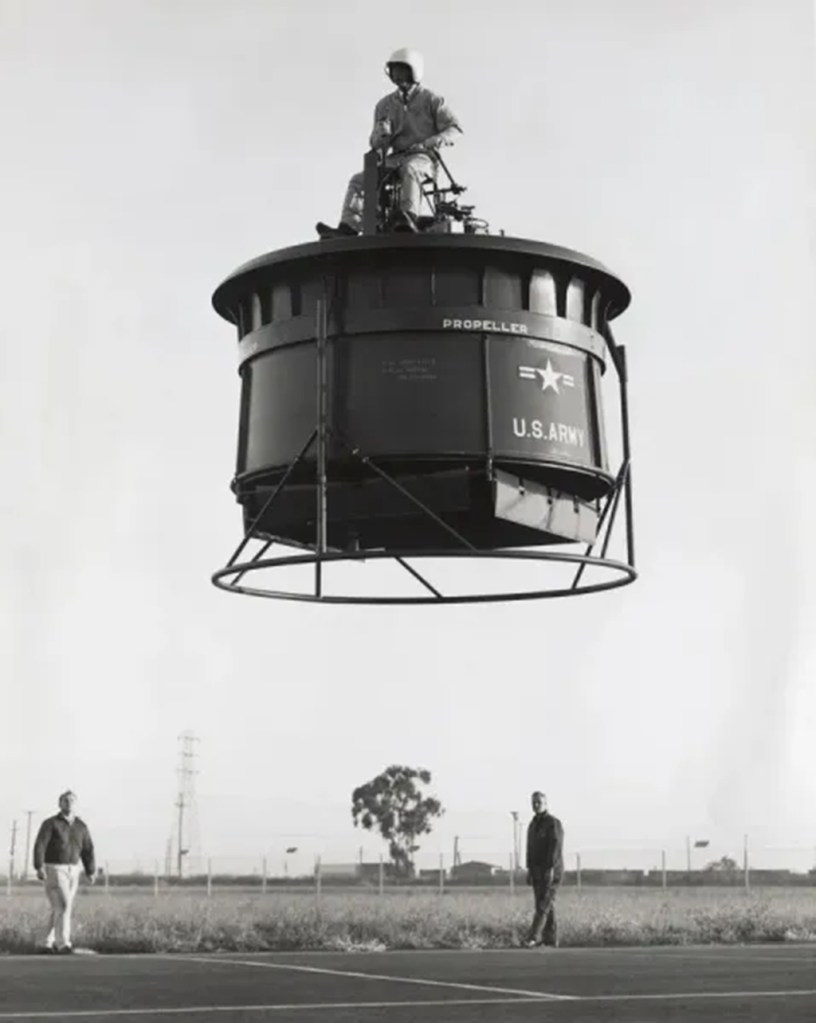
During the 1950s the U.S. military secretly put considerable research efforts into developing flying platforms. It was hoped that such a device could be used for military logistics. At the time, the aircraft industry as a whole was becoming increasingly interested in Vertical Take-Off and Landing (VTOL) aircraft. It was projected that future conflicts would start with a nuclear exchange, destroying most airbases and their runways. To ensure a second-strike capability along with the ability to move heavy military equipment to different locations, aircraft would need to operate from makeshift airbases, roads and fields.
In 1953 the U.S. Army issued contracts to the De Lackner Company and Hiller Aircraft to develop a flying platform. De Lackner utilised a rotor system while Hiller’s design opted for ducted fans. Performance and design issues ultimately ended both the contracts with limited success.



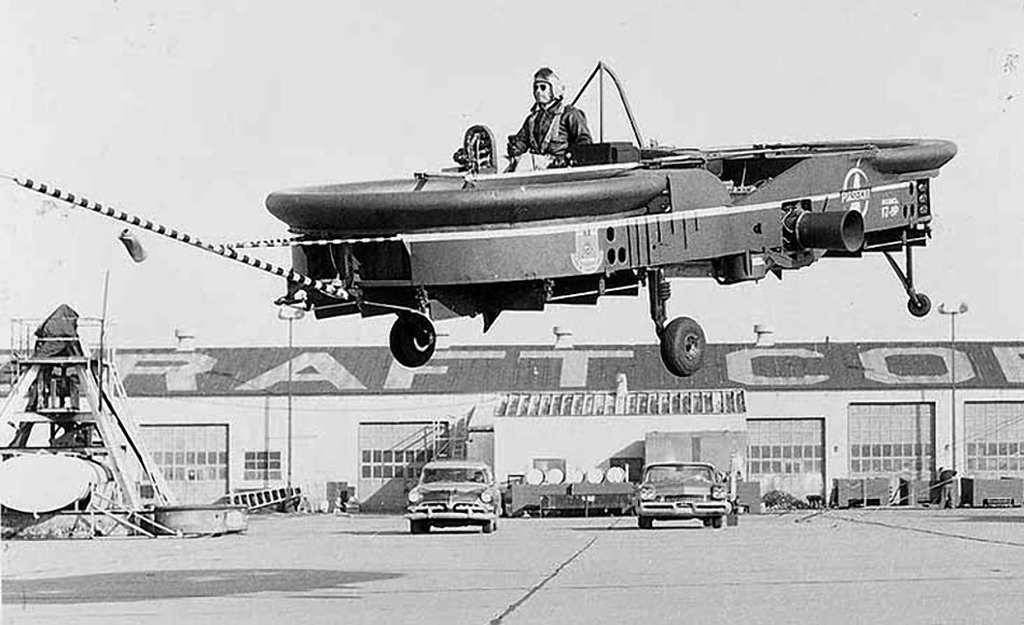
Similarly, in 1957 the U.S. Army issued a contract to develop a flying jeep that was lightweight, manoeuvrable and capable of VTOL. Several companies, including Chrysler, Piasecki, and Curtiss-Wright submitted designs, however the program was ultimately discontinued.
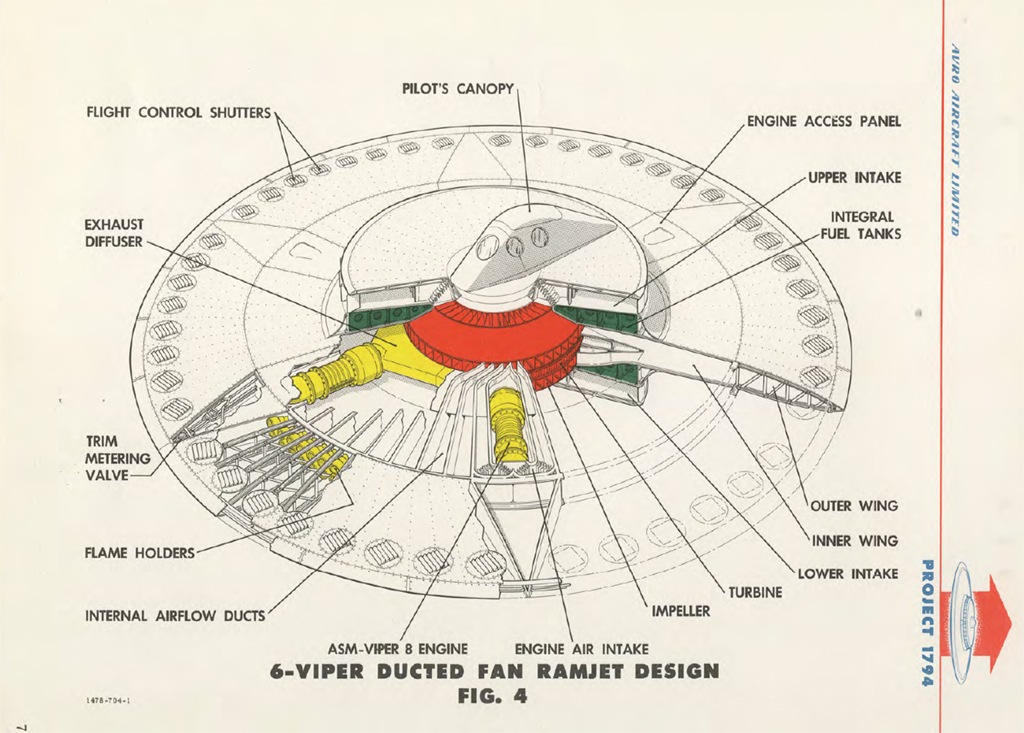
From 1955 the United States Air Force funded a Special Projects Group of the Avro Canada Aircraft manufacturing company to build a VTOL disk-shaped aircraft known as Project 1794/Weapons System 606A. The jet powered supersonic ducted fan design met its demise, along with the Avrocar (Avro Canada’s entry into the Army’s flying jeep program), in 1961 when funding was cancelled.
Is it possible that another high performance flying platform design was successfully developed behind closed doors which became fully operational before June of 1959? It’s certainly not outwith the realms of possibility when considering the amount of funding that’s directed to U.S. black projects. How many classified aircraft have potentially been developed, tested, became operational, and possibly even been retired or mothballed without any public knowledge whatsoever?

Bye then.
 UFONAR
One Reply to “”